

Florida High Speed Rail
Challenge:
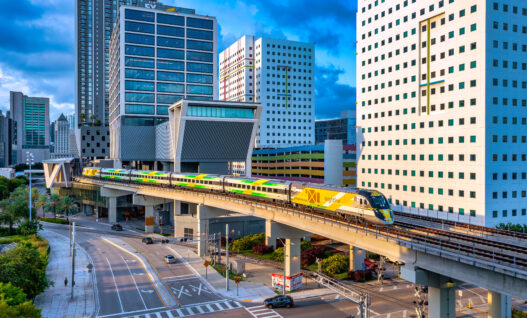
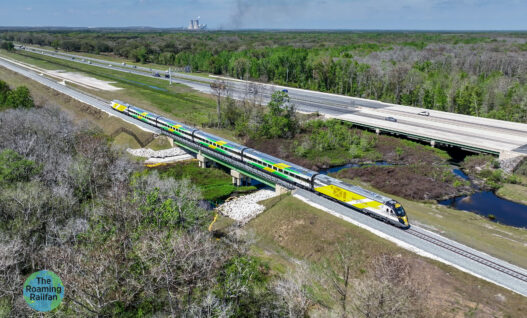
The All Aboard Florida Passenger Rail was a private high-speed rail project that connected hundreds of miles along one of the most visited states in the US. The rail connects Orlando in Central Florida to Miami in South Florida, covering 235 miles. The trains operate at a speed of up to 125 mph and with travel time reduced to 3 hours between the highest and lowest points on the map. One of the challenges of this massive project was working cohesively with the involved entities, including Brightline, CFX, the Florida Department of Transportation and the Florida Turnpike. Understanding and meeting specifications was pertinent to the successful completion of the project, while maintaining project deadlines. GRL engineers provided dynamic pile testing and related services for various structures along the 35-miles long portion between Cocoa and Orlando International Airport.
Method:
GRL Engineers provided testing services for various bridge structures on the western portion of the rail including the Goldenrod Road Underpass, SR 528 at Narcoossee Road, SR 417 and structures on the eastern portion of the rail including Pine Street, I-95, SR 528 Flyunder, Industry Road and the SR 528 Underpass.
For efficiency, GRL Engineers performed GRLWEAP analyses for the various piles and hammer combinations involved in the project. The GRLWEAP analyses provided recommendations for hammer selection, cushion and helmet based on the pile types, length, required ultimate capacity and geotechnical information. During pile driving, GRL Engineers provided pile driving monitoring with the Pile Driving Analyzer® (PDA) and utilized CAPWAP® software to determine ultimate bearing capacity for each selected pile. Some locations utilized Test Piles and driving criteria for production piles, while others applied 100% dynamic pile testing. The work included large size and long square prestresses concrete piles, in some cases requiring splicing; also long steel pipe piles for temporary construction trestle supports.
Results:
Each bridge location along the rail line required an analysis of the specific pile types and geotechnical conditions. Some of the foundation piles were 24 and 30-inch square prestressed concrete sections founded in deep sand bearing stratums with long lengths of up to 167 feet in certain locations. These long pile lengths were installed in shorter spliced sections using mechanical splices. GRL was instrumental in monitoring the installations so that driving stresses were kept to within allowable limits given the specifications for these type piles. Dynamic pile testing results from one of the prestressed concrete piles can be reviewed in Figure 1. CAPWAP analysis of this prestressed concrete pile can be seen in Figure 2.
Project Details
Client: Granite Construction, Inc.
GRL Office: Florida
GRL Services
- High Strain Dynamic Testing
- CAPWAP® Analyses
- GRLWEAP Analyses
-
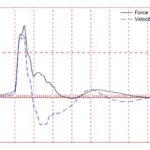
- Figure 1. Force vs Velocity for prestressed concrete pile
-
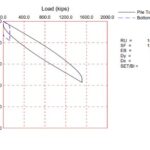
- Figure 2. Load vs Displacement for prestressed concrete pile